Watch Sumo Morning Practice in Osaka: Stables & Tours
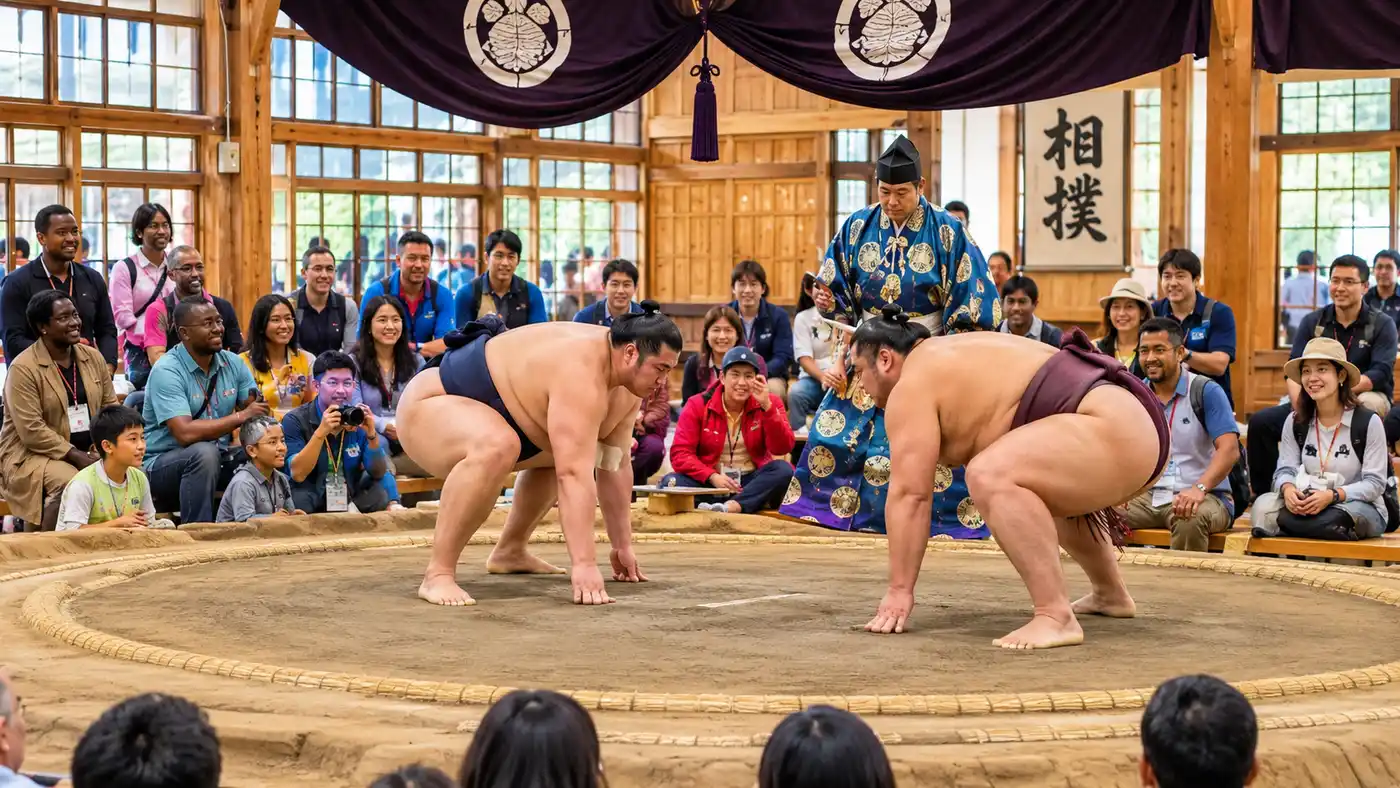
The morning air in Osaka hits cold at 7:15 AM. You turn down a quiet residential lane somewhere between Tennoji and Sakai, guided only by a faint scent of sweet bintsuke pomade drifting through the damp breeze. Then the sound hits you. It is a dull, heavy thud followed by the scrape of bare feet on packed dirt. If you plan to watch sumo practice osaka offers one of the most intense, unvarnished sports experiences on the planet, provided you show up in the right calendar month and know how to behave.
Most travelers arrive with misconceptions about how sumo works outside Tokyo. They assume stables sit on street corners year-round waiting for visitors. The reality requires a little more planning, some subway rides into quiet temple suburbs, and an appetite for sitting stone-still on hardwood floors while 300-pound men collide three feet from your knees.
Book your sumo show osaka experience:
The Truth About Sumo Heya in Osaka: Timing Is Everything
Here is the first thing you need to know. Osaka has zero permanent professional sumo stables. Every single one of the 43 official stables (known as heya or beya) is located in the greater Tokyo area, clustered around Ryogoku, Sumida, and parts of Chiba. They only pack up their training gear, their cookware, and their massive wooden practice pillars to relocate to the Kansai region once a year.
This annual migration happens ahead of the March Grand Sumo Tournament, officially known as the Haru Basho. For roughly four to five weeks starting in late February and running through late March, the entire professional sumo world squats in Osaka. They do not stay in hotels. Instead, stables set up temporary quarters (shukusha) in local Buddhist temples, suburban shrines, community centers, and occasionally rented warehouses across Osaka, Sakai, and Nara.
If you visit during this window, you get raw access. The temporary setup often makes morning practice (asa-keiko) feel much more intimate than the fortress-like permanent headquarters in Tokyo. If you are researching a sumo stable osaka april visit, things get trickier. The tournament wraps up in late March. By the first few days of April, wrestlers either pack their mawashi belts to head back east or embark on the spring Jungyo, which is a traveling exhibition tour through smaller regional towns. Catching legitimate sumo training osaka april sessions is nearly impossible unless you happen to catch a stable during their brief two-day pack-up phase or attend a regional tour stop.
If your trip falls in March, you are in luck. You can pair morning practice visits with tournament tickets in the afternoon, a full day breakdown explained in our Osaka Grand Sumo tournament guide. Outside of late February and March, active professional training camps do not exist in the city.
Booking an Osaka Sumo Stable Tour: Guided vs. Independent
Getting through the door of a morning practice takes one of two routes: an organized tour or independent legwork. Stables are active workplaces, not tourist attractions. They permit observers purely out of tradition and goodwill, which means access rules change on short notice depending on whether the stable master (oyakata) is in a welcoming mood or frustrated with poor visitor etiquette.
Pro tip: Temporary stable locations change every few years based on temple renovations, so always verify the exact street address the night before rather than trusting older forum threads.
Booking a guided sumo training tour osaka style is by far the easiest route for international visitors. A licensed guide handles the initial relationship with the stable master, briefs you on protocol, and meets you near the suburban station at an ungodly hour. These tours usually cost between 11,000 and 15,500 yen per person. While that might sound steep for sitting on a floor, having an interpreter who can explain wrestling tactics and stable hierarchy transforms confusing grunts into a compelling narrative.
Going independently is technically free at certain stables, but it requires patience and decent Japanese language skills. Some stables allow quiet walk-ins who stand at the back of an open garage door or look through sliding glass windows. Others explicitly post signs turning away unaccompanied tourists. If you try the solo route, you must call the temporary lodging or check their Japanese-language social media accounts a day in advance to confirm practice times.
| Option | Cost (per person) | Advance Booking | Best For |
|---|---|---|---|
| Guided Stable Tour | 11,000 to 15,500 yen | 2 to 6 weeks ahead | First-timers wanting context and guaranteed entry |
| Independent Temple Visit | Free | Self-arranged phone call | Japanese speakers, travelers on a shoestring budget |
| Year-Round Tourist Ring | 7,000 to 12,500 yen | 1 to 3 weeks ahead | Travelers visiting Osaka from April through January |
If you opt for guided sumo training osaka tickets, book them as soon as your travel dates are locked. Spots fill quickly because stables keep spectator groups tiny, usually capping crowds at 6 to 12 people to prevent practice disruptions.
What Actually Happens During Morning Keiko
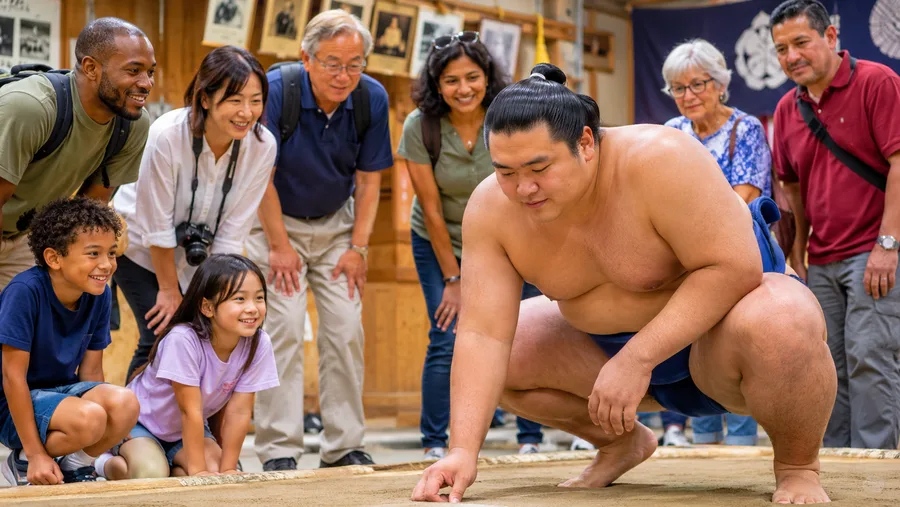
Practice starts shockingly early. The lowest-ranked rikishi (the teenage apprentices in the jonokuchi division) hit the dirt ring around 6:30 AM. By the time most visitors arrive around 7:45 AM, the higher-ranked wrestlers in the makushita, juryo, and elite makuuchi divisions have joined. You will instantly spot the seniority gap. Lower-tier wrestlers wear simple black cotton mawashi and spend half their time sweeping the ring, raking the dirt, and wiping sweat off their superiors.
The physical progression follows a strict, ancient rhythm:
- Warmup and basic conditioning: Wrestlers spend 45 minutes on repetitive solo movements like shiko (leg stomps) and teppo (rhythmic wooden beam strikes). The flexibility of men carrying 340 pounds will make your own hips ache just watching.
- Moshiai-keiko (king of the ring): The winner of a bout stays in the ring. Three or four other wrestlers immediately lunge forward, shouting and raising their hands to demand the next clash. It looks chaotic, but the refereeing eye of the stable master controls every second.
- Butsukari-keiko (collision drills): The most brutal part of the morning. An exhausted junior wrestler repeatedly charges into the chest of a senior wrestler, driving him across the ring until the junior collapses into the dirt, chest heaving and barely able to stand.
The intensity inside the room is suffocating. In winter and early spring, Osaka can hover around 42 degrees Fahrenheit outside, but the stable room feels hot from radiating body heat and heavy respiration. Nobody speaks except to yell for the next match. You hear flesh slapping against flesh with the crack of a baseball bat hitting leather. Sweat mixes with sand on their skin, turning into a gray paste that gets scraped off between bouts with wooden tools.
Book your sumo show osaka experience:
Rules and Etiquette: How to Behave at a Heya
You must understand that a sumo training stable osaka visit is not an entertainment venue. You are stepping into a sacred, dangerous athletic workspace. The dirt ring (dohyo) is consecrated ground. If you break decorum, the stable master will not hesitate to point at the exit door, and the shame of that walk is something you do not want to experience.
- Maintain total silence: Do not whisper, do not chuckle, and do not narrate what you see to your companion. Keep your phone on absolute silent, not even vibrate.
- Sit on the floor without pointing your feet: You will likely be given a thin cushion on tatami mats or bare concrete. Sit cross-legged or in seiza (kneeling). Never extend your legs forward so the soles of your feet point toward the ring or the stable master, as this is considered deeply offensive in Japanese culture.
- No eating, drinking, or chewing gum: Do not bring coffee cups or water bottles into the viewing space. Finish your breakfast before entering the temple grounds.
- Turn off camera flashes and shutter clicks: Video and photos are often permitted, but camera sounds break the wrestlers' concentration. Turn off electronic beeps and never use flash lighting.
- Stay put until dismissed: Do not wander around or stand up to stretch your legs during practice. If you get stiff, make small, discreet adjustments to your posture.
Note: If you suffer from bad knees or back issues, ask your tour operator about chair availability beforehand. Most temple venues only offer floor seating, and sitting motionless for two hours can be genuinely agonizing.
Missed the March Window? Watching Sumo in Osaka Year-Round
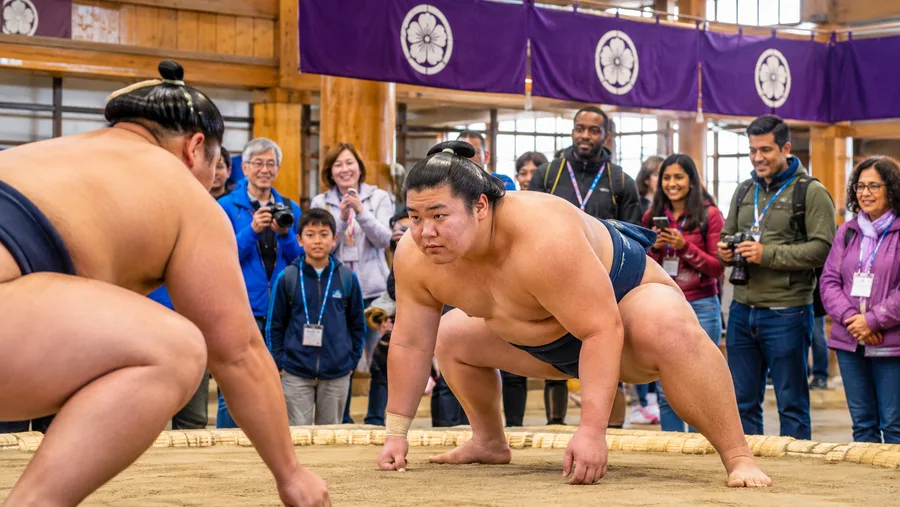
What if your flight touches down in August, November, or April? Do not give up entirely. You will not see active professional grand champions training for an upcoming basho, but Osaka has embraced interactive and cultural wrestling experiences that operate every single month.
For a structured cultural show complete with former professional rikishi, look into dedicated venues across the city. Places like Sumo Hall Hirakuza in Osaka stage high-energy performances where retired wrestlers demonstrate real techniques, explain training rituals, and invite audience members into the ring. It lacks the quiet reverence of a temple stable, but it makes up for it with accessibility, comfortable theater seating, and English explanations.
Here are your realistic choices if you are traveling outside the March tournament window:
- Entertainment dojos: Venues staffed by retired pros who demonstrate morning warmups, clash in competitive exhibition bouts, and answer questions over bowls of chanko nabe stew.
- Tokyo day trip: If professional practice is a non-negotiable bucket-list item, take the Shinkansen bullet train to Tokyo. It takes roughly two and a half hours each way, opening access to permanent stables that train year-round except during holiday breaks.
- Local amateur clubs: Osaka has several universities with renowned sumo programs, such as Kindai University. Their club sessions are sometimes open to respectful onlookers who contact athletic departments directly.
These alternatives deliver plenty of fun. You actually get to talk with the wrestlers, take photos together without walking on eggshells, and taste the high-calorie chicken stew that fuels their mass.
Frequently Asked Questions about watch sumo practice osaka
Can I watch sumo morning practice in Osaka outside of March?
Active professional stables only train in Osaka from late February through late March. Outside this window, you can visit cultural sumo entertainment shows featuring retired wrestlers or take a morning bullet train to permanent stables in Tokyo.
How much do sumo morning practice tickets cost in Osaka?
Guided stable visits run between 11,000 and 15,500 yen per person. If you locate a temporary temple lodging that permits independent public viewing from an open doorway, there is no admission fee, though a small donation to the temple is customary.
What time does morning practice start and finish?
Training begins around 6:30 AM with the lowest-ranked wrestlers. The senior rikishi enter around 7:30 AM or 8:00 AM, with the highest-intensity sparring wrapping up between 10:00 AM and 10:30 AM.
Are children allowed to attend morning training sessions?
Most tour operators and stables require visitors to be at least 10 to 12 years old. Because absolute silence and stillness are mandatory for nearly two hours, young children generally struggle with the strict environment.
Quick Reference
- Season: Late February to late March only
- Typical timing: 7:30 AM to 10:00 AM
- Seating: Floor mats or cushions (rarely chairs)
- Guided tour price: 11,000 - 15,500 yen
- Main rule: Total silence throughout
Book your sumo show osaka experience:
My Take
Seeing a morning sumo training session up close ruins televised sports for you in the best possible way. The sheer physical violence of the collisions, the smell of sand and pomade, and the heavy silence of a temple hall create an atmosphere that feels entirely detached from modern city life. It is uncomfortable, your legs will go numb, and waking up at dawn on vacation feels brutal. Yet, the moment two massive athletes collide right in front of your face with a force that rattles your ribs, you will forget all about your sore knees.
Read more about sumo show osaka.